January 1, 2026 - It has come to this - a blog page... Blog is short for Web Log. Now that the Internet has become an almost indispensable part of our lives, many have started using it to keep an online journal of sorts. I started adding "Newsworthy Stuff" tidbits back near towards the end of 2000 on my What's New Page. I thought these tidbits would be more useful if they were compiled on one page. Therefore, all these tidbits will be compiled on this page after they've had their Net time on the most recent What's New Page, with the most recent entries at the beginning (so you don't have to scroll so much). Added links along the way will continue to be compiled on annual "What Was New" pages that you can access by clicking on year graphic. Thanks. Betty
Suggested Citation: Jung, B.C. (2008 - 2026). Betty C. Jung's 2008 Public Health Blog.
Web document: https://www.bettycjung.net/Blog2008.htm
December 19, 2008 - Bioterrorism
Once again, Healthyamericans.org has released its annual edition of Ready or Not? Protecting the Public's Health From Diseases, Disasters and Bioterrorism. Well, is the U.S. ready? As I said last year at this time - Depends. All states have been rated for having an adequate plan, but we all know even a well-written plan that is not implemented or effectively executed is really worthless. Using the same criteria as in recent years, only 5 states (10%) met the 10 indicators. This is an improvement considering only one state met the 10 in 2006. However, only one state managed to stay on top of things between 2007 and 2008, and that's Virginia, so they must be doing something right!
You can find links to the annual reports from the past three years on my Evaluation/Report Cards Page .
December 18, 2008 - I've Loved You So Long
Probably the most worthwhile picture of the year in terms of giving you back the faith you may have lost over the slew of junk films coming out in recent years. Kristin Scott Thomas (who is up for a Golden Globe) will blow you away in this French film (don't worry, it's subtitled) about a woman who tries to fit back into society after being put away for 15 years. Why was she put away? Well, you have to watch the film. Worth your time to see.
December 16, 2008 - I know I'm early , but that's only because I have tons of stuff to do BEFORE January 1st.... Thanks for understanding....
This how many quality measures you will currently find in the recently released "Inventory of HHS Quality Measures". I am sure more measures will be added. The inventory is a downloadable Excel file which should prove to be useful for biostatisticians and evaluators in search of appropriate measures for looking at performance. Categories include Condition, Sub-Condition,Domain, Care Settings, Numerator, Denominator, Explanation if no Numerator/Denominator, Data Source, Purpose(s), Reported, Measure Maintenance and Public Availability. As a spreadsheet you will be able to sort the list by any of the above headings. How cool is this? You can find a link to this Web site on my Health Care Quality Standards Page .
November 22, 2008 - Thank you for caring! To all who work in Public Health, and everyone else who believes in what Public Health is all about, I salute you!!!
Thanks to Research!America for sponsoring "Public Health Thank You Day" - and setting aside one day to recognize Public Health Professionals!
November 21, 2008 - Chronic Disease Cost Calculator
Here is a wonderful tool that was developed over a year ago by RTI. I had the opportunity to actually pilot test this at the time and found it to be really useful in providing some statistics that are somewhat scary in putting a number to the problem (like a name to a face).
This downloadable tool can be used for:
(1) Estimating state Medicaid expenditures for six chronic diseases � congestive heart failure, heart disease, stroke, hypertension, cancer, and diabetes.
(2) Generating estimates of the costs to Medicaid of selected chronic diseases using customized inputs (e.g., prevalence rates and treatment costs). and,
The statistical analysis used to generate these estimates minimizes double-counting of costs across diseases, which often occurs in other cost estimates. These estimates provide vital information to better understand how pervasive these chronic diseases are and the cost burden they impose. (Source: http://www.cdc.gov/nccdphp/resources/calculator.htm)
The statistics come from a variety of sources that would be unwieldy to extract, but are made relatively simple to access with this tool. Once the statistics come up, based on the fields you have chosen, you can then print the results and/or save it into a data file that can be then retrieved with Excel.
Most likely you can expect new versions in the future as more current data become available. You can find links to this calculator (technical appendix and user manual are also available) and where to download it on my Chronic Disease Page and my Free Public Health Software Page .
November 19, 2008 - ExpectMore.Gov (NOTE: 8/23/2013 - This site no longer exists)
Fifteen years, after the Government Performance Results Act of 1993 was passed, we can now view the results of what the U.S. government has done with this Act. It HAS honored its promise to "improve Federal program effectiveness and public accountability by promoting a new focus on results, service quality, and customer satisfaction;" among other things.
Yes, the U.S. government has seriously evaluated all the programs it is funding, graded them on their effectiveness, and terminated those that are not. Now that's tough love. The results of how government programs measure up can be found on ExpectMore.Gov. As a public health professional, I was really interested in what was going on with chronic diseases. I found a Webpage that included a summary for Chronic Disease Prevention Assessment , which was rated as Moderately Effective . The Webpage included the most recent statistics for major chronic disease outcome measures gathered by the federal programs addressing chronic diseases, like "Age-adjusted percentage of persons with diabetes age 18+ who receive an A1C test at least two times per year." In 2006, it was 68%. You must check out this Web site for the wealth of information and data it contains. Learn about the standards that are being set that programs are measured against. I believe this is a relatively new site (I don't know, the pages are not dated) so I found it a bit hard to navigate. Hopefully this will improve so all citizens can use this to learn more about and understand the government programs that were meant to provide services to taxpayers.
November 18, 2008 - 2007 Prevalence of Recommended Physical Activity Map
Here is the latest map from the CDC that shows how physically active we are, by the state we live in. Not too good. Nationally, in 2007, 24% of people reported no leisure time physical activity, with only 48.8% meeting recommended levels of physical activity. The most inactive were living in Louisiana, Mississippi and Puerto Rico. Less than 4 in 10 people in these states are exercising at recommended levels. Alabama, North Carolina, Tennessee and the Virgin Islands are not far behind, with 4 in 10 exercising at recommended levels.
Recommended physical activity is defined as reported moderate-intensity activities in a usual week (i.e., brisk walking, bicycling, vacuuming, gardening, or anything else that causes small increases in breathing or heart rate) for at least 30 minutes per day, at least 5 days per week; or vigorous-intensity activities in a usual week (i.e., running, aerobics, heavy yard work, or anything else that causes large increases in breathing or heart rate) for at least 20 minutes per day, at least 3 days per week or both. This can
be accomplished through lifestyle activities (i.e., household, transportation, or leisure-time activities). (Source:
http://apps.nccd.cdc.gov/PASurveillance/StateSumResultV.asp)
Compare this map to the Obesity and Diabetes maps below (October 10th entry). See some correlation among these maps? If you haven't seen the connection between being physically active and controlling obesity and diabetes (type 2), there is now no excuse. Time to start moving on a regular basis or we as a nation will be in more trouble than we are now when it comes to chronic diseases. See Chronic Disease Information and Fitness for more information and resources.
The newest tool for the Epi toolbox is Google's Flu Trends (http://www.google.org/flutrends/) that graph the frequency of flu queries, by geographic location. Basically, Google's premise is people will search for information on what is currently ailing them.
Epidemiologic trends help public health practitioners to determine the scope of disease outbreaks, along the parameters of person, place and time. Compiling such statistics usually kept field epidemiologists very busy, especially during epidemics, when the main objective is to contain the spread of the disease. I remember those days of creating histograms to graph the epidemic curve (epi curve).... These days, the Internet has made it so easy to share information that new technologies in data mapping can be easily disseminated to anyone who has Internet access.
Google's comparison of the query-based flu estimates for the U.S. Mid-Atlantic region surprising matches CDC's flu activity stats! In a test performed last year, Google identified flu outbreaks two weeks faster than the CDC, which relies on reports from local hospitals and state health departments for its statistics! (http://www.sfgate.com/cgi-bin/article.cgi?f=/c/a/2008/11/11/BUIL142LI8.DTL). While still in its experimental stage, the potential for using the frequency of topic-based queries to estimate phenomena is promising. Also, don't forget to check out Health Map (See July 9, 2008 blog entry) that offers an up-to-the-minute global picture of disease outbreaks based on disease reports found on the Web.
November 15, 2008 - Big D's Legends of Rock & Roll
Close to 3 1/2 hours of the '60s music from The Buckinghams, Gary Puckett & the Union Gap, The Turtles and Felix Cavalerie & the Rascals, and Tommy James and the Shondells. Forty songs in all, with Greg Hawkes sneaking in a Cars song with the Turtles, which actually turned out to be the most entertaining duo. Ever nostalgic, it was a bit sad to see all this great music as a throwback for our youth (well, at least my youth), and how such music have stood the test of time. I am glad we can still enjoy them, even though most of them are now in their 60s. A truly inspirational night of great music!
November 6, 2008 - "It is very risky for households to rely on financial markets to provide adequate retirement income."
And, "Despite an increase in household wealth relative to income, households did not build up enough of a buffer for weathering a market downturn."
The report goes on to say, "It will take the average household over 30 years to recover the wealth lost in 2000 and 2001." This conclusion was based on analyses of consumer wealth of the 1990s right after the 2001 recession. I wonder how many decades it will take for the average household to recover from 2008.
(Source of quotes: http://www.epi.org/content.cfm/briefingpapers_bp129)
Today, these statements would be seen as, "Duh, oh-so-common-sense." These statements were actually prescient, given that they were written in 2002 in a report by the Economic Policy Institute entitled, "Retirement Out of Reach."
Retirement may continue be out of reach for many (in growing numbers), but it is hardly the pressing issue for those currently out of work - for months, with no hope of finding a job at all. The job market is not good at all, and competition is fierce.
Of course, we are well into reaching the second decade of this century in a little over a year, and the future is dire for many suffering from this year's downturns in a variety of markets, from housing to retail to just about every sector of the economy. For sure, the new administration will have plenty to do, and there is hope that problems will be addressed. Let's keep our fingers crossed.
October 30, 2008 - CHSI - Community Health Status Indicators
The Health and Human Services just released its Community Health Status Indicators Web site where you can obtain county-level data for over 200 health status measures, interactively, by simply entering your state and county. For each county, it also provides a listing of peer counties you can use to do comparisons.
Public health professionals are always trying to stretch the limited funding they get for public health programs to the max. One of the ways of doing this is to develop programs that target specific population groups that have been identified to have a greater risk for a particular disease or health issue. Once we understand the population we want to work with, we can then tailor our public health interventions to the audience we want to reach. The message is still the same, but the methods may be different to accommodate a particular population's characteristics. This is what cultural competency is basically all about.
Of course, we are not always so fortunate to have the data we need to assess the populations we want to reach, that is, until now. Federal agencies are beginning to make available population statistics on the Internet that are timely and useful. For example, the National Center for Health Statistics have made analyzing enormous population-based survey data easy by providing online statistical tools (e.g., Health Data Interactive) with which you can rapidly tabulate and graph data for most demographic variables.
The initial screen provides the population size, age and race/ethnicity data. From the left side menu you can choose data for numerous categories, with the option to print one particular category, or the entire report in pdf. How great is this? Check this out - it's really good! You can find a link to this very useful Web site on my U.S. Federal Government Statistics Sites under the section entitled, "Sources of State and Local Area Data".
We are experiencing hard times, and it is beginning to affect the well-being of people in general. In a recent Gallup poll, economic issues were identified as the most important issue people are dealing with today. Unfortunately, some are taking desperate measures to resolve their issues, one of which is suicide. Just today, Reuters reported that U.S. suicide rates are rising, driven by a new group - middle-aged white women. (http://www.reuters.com/article/healthNews/idUSTRE49K0MY20081021?feedType=nl&feedName=ushealth1100). Though the report said it is unclear why, I can bet it has to do with the economy, and the fact that many middle-aged women are dealing with major responsibilities if they so happen to be single moms trying to make ends meet.
US census 2000 data show that 85.1% of custodial parents are custodial mothers (http://www.census.gov/prod/2000pubs/p60-212.pdf). According to Divorcemag.com, "As of 2003, 43.7% of custodial mothers and 56.2% of custodial fathers were either separated or divorced," and, 2000 stats show that there are 5.239 million single mothers raising one child, and 475,000 single mothers raising four or more children.(http://www.divorcemag.com/statistics/statsUS.shtml).
If you know of anyone in need of help, be kind and sympathetic and refer them to suicide prevention services. You can find a link to suicide prevention resources and several national hotlines on my Suicide Prevention Section .
October 14, 2008 - Basic Health Care
Infant mortality rate world map (deaths/1,000 live births)
According to Reuters, the World Health Organization (WHO) [http://www.reuters.com/articlePrint?articleId=USTRE49D3HJ20081014] is "calling for an overhaul of how health care is financed and managed globally." When was the last time you heard about that? Seems like the US health care system isn't the only one in trouble these days.
WHO estimates that "some 60 million will give birth without medical assistance this year," and the "difference in life expectancy between the richest and poorest countries still exceeds 40 years." Reuters also reports, "Medical care in the rich world has also become dangerously fragmented,... front-line health workers ought to better assess patients' overall needs instead of referring them to costly specialists." Globally, "Annual government spending on health worldwide varies from just $20 to more than $6,000 per person. More than 100 million people a year fall below the poverty line because of personal health expenditures, and as many as 5.6 billion people have to pay for more than half of their health expenditures themselves."
Nothing is more important than to be able to bring children into this world who can thrive and be a productive member of society. Basic health care that makes this possible, and the adequacy of such health services can be measured by infant mortality rates. As this map shows, major disparities exist among countries. All countries should strive for olive green (0 - 4/1000 live births). Note that the US is not in this category. The current rate for the US is 6.3/1000, and ranks 179/220 countries. Singapore is 220, with the lowest rate of 2.30/1000 live births. (http://www.sitesatlas.com/Thematic-Maps/Infant-mortality-rate.html)
Education really adds to our quality of life. Some 40 years ago, people can get by with a high school education. This is no longer true.
In today's uncertain economy, Education plays an even greater role by improving our chances to stay competitive in the job market. Regardless of one's race/ethnicity, education means a higher salary. All well and good.
With Public Health's increased emphasis on the social determinants of health (see my September 24th blog entry), we are beginning to appreciate how Education impacts our Health as well. The Robert Wood Johnson Foundation Commission to Build a Healthier America recently released its "Education and Health Calculator," which shows how Education impacts Mortality, by state and counties. It is interactive so you can see mortality can be reduced by increasing the percentage of the state's college population. Check it out. You can find a link to this on my Evaluation Resources Page , under the State Report Cards - [Socio-Demographics] (Non-government) section.
October 10, 2008 - New Physical Activity Guidelines
Fortunately, new guidelines have just been released this week on physical activity (not a moment too soon) by the U.S. Department of Health and Human Services (HRSA). Basically,
Children and adolescents (aged 6�17), 1 hour (60 minutes) or more of physical activity every day;
Adults (aged 18�64), AT LEAST (my emphasis) 2 hours and 30 minutes a week of moderate-intensity, or 1 hour and 15 minutes (75 minutes) a week of vigorous-intensity aerobic physical activity, or an equivalent combination of moderate - and vigorous intensity aerobic physical activity; OR,
An equivalent mix of moderate- and vigorous-intensity aerobic activity. Activity should preferably be spread throughout the week, and done for at least 10 minutes at a time.
In addition, all adults need muscle-strengthening activities on 2 or more days each week that work all major muscle groups (legs, hips, back, abdomen, chest, shoulders, and arms).
Older Adults (aged 65 and older) should be as physically active as their abilities
allow. They should avoid inactivity.
Source: 2008 Physical Activity Guidelines for Americans
At-A-Glance: A Fact Sheet for Professionals
http://www.health.gov/paguidelines/pdf/fs_prof.pdf
Simply put, as my mother used to say, she loved "Get Up and Boogie". You can find a link to the 2008 Physical Activity Guidelines on my Fitness Page .
October 10, 2008 - New Diabetes Resources
Here is a wonderful online video series of the basics of diabetes from the Agency for Healthcare Research and Quality (AHRQ). Coming in at less than 15 minutes total, these 3 videos will explain, in the most simplest of terms, what diabetes is and what those who are affected need to do. Wonderful for those just diagnosed, and everyone else who should know about a disease that affects millions, and many more in the years to come.
Graphic Source: http://www.healthcare411.org/videocast.aspx?id=323
You can find a link to the AHRQ page with these videocasts on my Diabetes Resources Page, under General Consumer Information.
Nothing hits home better than a good graphic (you know, a picture is worth a thousand words). The CDC has recently made available a series of U.S. maps comparing the relationship between the obesity and diabetes epidemics, both following an unfortunate increase in prevalence over time.
Apparently, no state is immune from the onslaught. Bad habits have finally caught up with everyone!
You can find a link to this map and other diabetes statistics maps on my Diabetes Resources Page, under Public Health Information.
October 8, 2008 - Cell Phones, Cancer and Popcorn
How far should marketers go in selling their products? When they prey on the health fears of the general public, then I think that is going too far. A recent Internet video sensation shows encircling cell phones with the capability of popping popcorn kernels. It turned out to be a hoax, and a dangerous one at that, especially when the National Cancer Institute just published last month a fact sheet entitled Cellular Telephone Use and Cancer Risk to address the long-standing concerns of cell phone use. (Source: http://www.cancer.gov/cancertopics/factsheet/Risk/cellphones)
The explanation for the hoax, posted on the CNN Web site
(http://www.cnn.com/video/#/video/tech/2008/07/09/carroll.cellphone.popcorn.cnn) did not go far enough to allay the fears people already have about the health risk associated with cell phone use. Unfortunately, while the Internet is wonderful for rapidly relaying information to many people, it can also be used for relaying misinformation and disinformation. For all purveyors of health information, or, any kind of information that can be interpreted as health information, be ethical and cognizant of what you put out there. It will save me, and others who feel the same way as I do, the time to try and correct the disinformation.
October 6, 2008 - $2,859.25 is what each family in America is paying for the bailout, according to Washingtonwatch.com. And, the official name for the bailout is "The Emergency Economic Stabilization Act of 2008." For more information, check out The Emergency Economic Stabilization Act of 2008
September 24, 2008 - Social Determinants of Health
Environmental justice, which sought to address the inequitable environmental health burden on certain populations emerged in the early 1980s, focused on the impact of social and environmental inequities. More recently, social factors (e.g., Education, Work, Early Life Experience, The Economy, Housing, Race and Ethnicity, Community, Income) have gained prominence in the consciousness of public health professionals as risk
factors and markers. In attempting to address Healthy People 2010's other overarching goal - to eliminate health disparities, public health professionals realized that it is not enough to just work for access to health care for everyone. Over time, it has become more evident that we need to look at the physical and social environments that the populations we serve live, play and work in. The more we look at ways to improve the health of the population, the more we realize the multiple social factors that impact our wellness. For example, many studies show that one's health differ by education, income, etc.
Public health practitioners appreciate the impact of the environment we live in has on health. This is why three of the "10 Essentials of Public
Health" deal with the world around us:
Diagnose and investigate health problems and health hazards in the community.
Develop policies and plans that support individual and community health efforts.
Enforce laws and regulations that protect health and ensure safety.
Determinants of health are those factors that impact our health. Healthy People 2010 looks at determinants of health as a factor in a systematic approach to health improvement in achieving Healthy People's Goal 1: Increase Quality and Years of Healthy Life.
In keeping with a population-based approach, it is becoming increasingly clear and necessary to ALSO address social factors in ensuring the Public's health so that we all can enjoy healthy living, or what some are now seeing as a call for social justice. Most of these social factors are amenable to interventions, and most likely the focus of many public health interventions will be calling for action in these areas, many of which require a long-term committment to see results. You can find links to 15 sites addressing
SDOH on my Public Health Practice Page, under the section called "Social Determinants of Health."
September 24, 2008 - Health Care Systems Profiles
The U.S. health care system has been considered by many as dysfunctional and in need of a major overhaul, while at the same time it is considered the best in providing quality health care, but at a price. How would we go about rectifying the bad and retaining the good? Well, we can probably learn how other countries' health care systems work, and maybe get some ideas about how we can go about revamping our system.
The Commonwealth Fund has recently released its "Health Care System Profiles" for Denmark, France, Germany, the Netherlands, Sweden, and the U.K., with the promise of more countries to come. Each profile follows a similar format addressing the questions of:
Who is covered?
What is covered?
How is the health system financed?
How is the delivery system organized?
What is being done to ensure quality of care?
What is being done to improve efficiency?
How are costs controlled?
References
This is definitely a more rational approach to assessing the problem of a dysfunctional health care system that I think could form a good foundation for intelligent dialogue. The profiles' format allow for comparative studies to evaluate the pros and cons of each system, and that is always a good way to start the discussion of potential solutions. The last time something like this was done was Michael Moore's approach in his film, "Sicko". Moore basically raked the U.S. health care system over the coals. While Moore did make some good points about the inequities in health insurance coverage, his presentation was too polarizing to influence health policy. It did raise awareness about the problems people are having with the health care system and health insurance, and it did cause people to talk about health care issues, but that was about it.
For sure, the U.S. health care system is in need of reform, and we wouldn't want it to collapse like the banking industry is doing these days. While controversy swirls around a federal bailout of the banking industry, at this very moment, who would be willing to bail out the health care industry, should it collapse?? Now that is food for thought. You can find a link to the Health Care System Profiles and other information about international health systems on my Health Care Quality Issues Page , under the new section of "Health Care Reform - International Health Systems."
September 17, 2008 - National Emergency Family Registry and Locator System (NEFRLS)
Natural or man-made disasters that wreak havoc in our lives include physical separation that is extremely traumatic to all involved. FEMA has a webpage that you can use to notify others, if you have been displaced, or search for those who have been displaced, reuniting people separated by disaster through the use of a national registry. Familiarize yourself with the registry before you need it. You can find a link to this registry on my Public Health Sites Page , under Emergency Preparedness.
September 16, 2008 - The Final Quarter of 2008
What an awful turn of events yesterday with the bankruptcy of Lehman Brothers, the takeover of Merrill Lynch, and AIG on the verge of collapse. I am sure that many people cannot wait for the new year.
September 5, 2008 - 7th Anniversary of 9/11/2001
Let us never forget all the innocent lives that were lost on that fateful day, and once again thank all the brave civil servants who died in the line duty. Many thanks to Suzanvitti.org for these wonderful graphics.
September 1, 2008 - Honesty is the best policy
Economic times are hard these days, and apparently the competition for jobs has caused some to lie on their resumes to get ahead. According to Rosemary Haefner, CareerBuilder.com, as reported in TechRepublic (8/18/2008),
38 percent of those surveyed indicated they had embellished their job responsibilities.
18 percent admitted to lying about their skill set.
12 percent indicated they had been dishonest about their start and end dates of employment.
10 percent confessed to lying about an academic degree.
7 percent said they had lied about the companies they had worked for.
5 percent disclosed that they had been untruthful about their job title.
Nobody likes liars, so be truthful. It is virtually impossible to get away with lying for long these days. And, if you really feel like you don't have the skills to do the job, then take the time to learn the skills you need. Check out my Career Resources Page for tips on how to improve your job prospects.
August 27, 2008 -
Emergency Medical Services (EMS) Data
In no other area of medical services does Time play such an important role in the survival of patients than during the provision of emergency medical services. Minutes
critically count as to whether someone will live or die. Given the current mess with the entire health care system, EMS can be seen as the tip of the iceberg of where we are in providing the critical services we need to survive.
Did you know that it takes, on average, 20 minutes to get to the scene of someone having a heart attack? What I found interesting was that it took less time (on average 17 minutes) in a rural setting and wilderness setting (on average 18 minutes) than in a suburban setting (21 minutes)!
The National EMS System (NEMSIS) seeks to quantify what EMS is all about and has recently made available national EMS data on its Web site. You can now find stats regarding Cardiac Arrest, Data Quality, Delay, Demographic, Disposition, Elapsed Time Reports, Financial Aspects, Medical and Trauma. Though not all states are currently submitting their data to this site, the site has done a wonderful job of making what it does have on hand easily accessible. There are also screens you can use to develop reports of what you are interested in. This is another wonderful tool similar to what the National Center for Health Statistics has done with its Nationl Data Interactive and VitalStats. Use NEMSIS data to develop benchmarks for looking at your emergency services. After all, it is only when we can quantify what is being done can we even begin to think about improving services. You can find a link to Nemsis on my Public Health Data Page , under "Health Services.
August 25, 2008 -
Internet Becomes a Main Source for Health Information
According to the recent Center for Studying Health System Change report, "Striking Jump in Consumers Seeking Health Care Information" (http://www.hschange.org/CONTENT/1006/#ib9), more people are seeking information about health issues from a variety of sources, with the Internet showing the greatest gains.
However, what I found most interesting is, for 2007, those with less education were not getting most of their health information from the Internet, yet those who were extremely poor were. Actually, the poorer, the higher the percentage. How do those who are 600% below the poverty level afford Internet access? Do they use the library? This strikes me as being strange. Maybe someone can explain this one to me, as there was no explanation in the article for this.
Another year, another milestone! After spending, literally years, working on this Web site, I am pleased to say that it still continues to attract visitors, generating over 2 million hits, to date! Although the focus has changed over time, it remains predominantly devoted to all aspects of Public Health. Thank you all!
August 23, 2008 -
NCHS's VitalStats
Another wonderful tool recently released by the National Center for Health Statistics is VitalStats, which aims to make national vital statistics easily accessible. It's a wonderful time to be an epidemiologist!!!
Currently available are easy-to-manipulate tables of births, perinatal mortality and populations. Death is in the works. Similar to the "Health Data Interactive" page, you can do all the analyses online, or save the data you want to your computer, but you will need the Beyond 20/20 software (which is free) to manage the tables off-line (See the 8/22 entry below for more details).
Graphic: 2005 US Birth Data
http://www.cdc.gov/nchs/datawh/vitalstats/VitalStatsbirths.htm
Here's an impressive example of what you can do with VitalStats.
After selecting the variables I wanted to analyze, I then created this bar chart which shows that pregnant women ages 45-49 are more likely to deliver their babies by a Cesarean section than have a vaginal delivery.
This would be virtually impossible to see wading through data tables. You can find a link to this wonderful site at Public Health Data Search Engines
August 22, 2008 -
Health Data Interactive
Every two years the National Center for Health Statistics (NCHS) sponsors a Data Users meeting in Washington DC, with free registration, and held at the historic Omni Hotel. For anyone dealing with statistics of any kind, this is a worthwhile meeting to attend. Over the years, the meetings have offered more and more hands-on sessions (which I absolutely love) about how to use the data compiled by NCHS. The amount of data they compiled is somewhat overwhelming for many users. While data from many of the national surveys they conduct are available for public use, it really isn't if you don't have SAS, SPSS, Stata or Sudaan. All these software programs cost a lot of money, and many health departments do not have the money to buy or the staff proficient in their use to make the most of "public use data files."
However, for this meeting the NCHS has posted a "Free SAS Viewer", which is a software program you can download to access the public use files in a SAS format so you can download them to a statistical program of your choice. You have to go to the SAS site to download the free viewer software, and they do make you complete a rather extensive online survey, as part of registration, of who you are and what you do that may be "costly" to some just for the chance to use the viewer. You can access a link to the viewer on NHANES SAS Viewer Page .
Unfortunately, most of the major surveys conducted by the NCHS have largely gone unexamined simply because of how the data are collected, that requires an in-depth understanding of appropriate survey methodologies to properly analyze the data. In general, the national survey files are useful for researchers interested in mining the data to answer particular research questions of interest, but not necessarily of practical use for most public health practitioners who are asked to quickly form an epidemiologic picture of the population or health behaviors targeted for public health interventions.
Fortunately, the NCHS is interested enough in making its data as accessible as possible for a variety of audiences. About 4-5 years ago, data from various NCHS surveys became accessible through its "Trends in Health and Aging" and "Health Data for All Ages" Webpages. These Webpages included compiled data from a variety of data sources (e.g., BRFSS, NHAMCS, NHANES, NHIS, NVSS, to name a few) that were made accessible through easy-to-manipulate data tables, with the ability to graph the data! From these tables you can conduct cross-tabulations of a variety of survey fields with sociodemographic variables, thus, allowing for quick analyses that allowed for trend analyses and epidemiologic characterizations of survey data.
More tables have been added over the years. You can do all the analyses you want online. But, if you prefer, you can analyze the data tables off-line by downloading them with the use of the Beyond 20/20 browser software, that was originally proprietary, but now freely available for download. And, this is what I would call Accessibility ! You can find a link for this software on my Public Health Software Page , under "CDC Software."
Graphic: Prevalence of Selected Conditions
(NHIS, 1997-2006)
Here is a graphic of a line graph I was able to create with the data I analyzed online, including the prevalence of conditions that cause the most deaths these days, over time. Notice the rising prevalence of diabetes. Need I say anything more?
I had a chance to speak with an NCHS person in-the-know, and was told that the "Trends in Health and Aging" and "Health Data for All Ages" pages will be merged into the "Health Data Interactive Page" and that more tables will be added in the near future.
You can find links to "Trends in Health and Aging," "Health Data for All Ages" (that still exist) pages, and the newly published "Health Data Interactive" page on my Public Health Data Search Engines .
August 10, 2008 -
Childhood Obesity
Children today are way too heavy to lead healthy lives. All that excess weight takes it toll on the body and sets the stage for the early development of chronic diseases. The "Eat Smart, Move More NC" program addresses this problem with a wealth of resources, from a simple tri-fold "Assessment, Prevention & Treatment Guide for Clinicians" to BMI charts and Blood Pressure tables for kids and prescription pads outlining simple measures to take to prevent obesity. You can find a link to these resources on my Nutrition Page , under Obesity/Overweight Children.
August 7, 2008 - Sometimes, just finishing is victory enough
Something to remember as we watch the Beijing Olympics....
August 6, 2008 - What We Should All Be Thinking About
Guess who is going to the theater to watch this? Anyone who is aware of the Bear Stearns bailout already know we are economically in big trouble.... (Thanks, Maria)
August 5, 2008 - Heart Disease and Stroke Information You Can Understand
The National Heart Disease and Stroke Prevention Program has just released "The Community Health Worker's Sourcebook: A Training Manual for Preventing Heart Disease and Stroke." It's 443 pages of easy-to-read information that can be used by Public Health and Health Care Professionals to train local citizens to be community health workers so they can provide educational outreach to those living in their community, educating others about heart disease, stroke and all the risk factors related to these two diseases.
Basically, I see this as a wonderful resource for anyone, who is not a medical professional, to learn all about heart disease, stroke and all the behaviors that you can change to reduce your risk for developing these diseases. Teach yourself, and those you love, from a reliable source of health information, about what one needs to know about heart disease and stroke, and what behaviors one can change, or maintain, to stay healthy.
The manual can be freely downloaded from the CDC Web site. You can find a link to this super manual on my Cardiovascular Disease - General Information Page , under "Public Health Information".
Graphic source: http://www.cdc.gov/dhdsp/library/chw_sourcebook/index.htm
August 4, 2008 - Public Health Spending
Commonwealthfund.org recently released its "National Scorecard on U.S. Health system Performance, 2008" , which is "the first comprehensive means of measuring and monitoring health care outcomes, quality, access, efficiency, and equity in the United States," and is an update of its 2006 Scorecard.
Its chartpack summarizes many epidemiological measures regarding the health of Americans. Compared to other countries, we don't come out on top, even though how much we spend on health insurance would suggest otherwise. The most interesting chart (104) showed how much is being spent on Public Health activities vs. what is being spent on health insurance administration. You can access this report from my Evaluation and Report Cards Page.
Why is so much being spent on health insurance administration, comprising 7.5% of national health expenditures? Note that 20% of those 18-64 (38 million) and 12% of children under 18 (9 million) do not even have health insurance [Chartpack, Slide 54].
There is something seriously wrong with how money is being spent for services and activites addressing health issues, and the enormous difference in the percent growth for health insurance administration (78%) vs. government Public Health activites (35%). Why is so little being spent on Public Health services and activities, of which we all benefit from (regardless of whether or not one has health insurance)?
July 31, 2008 - The Killers at Foxwoods MGM Grand, CT
What a great concert! Most of the audience that packed in tonight stood for the entire 80+ minutes concert while singing along. Synchronized light show added to the excitement.
Super "Mr. Brightside" and "Somebody Told Me."
However, the big surprise of the evening was the opening act, the Red Romance. I loved every song they sang, and believed they won over the audience by the end of their 40+ minutes of great music. Amazed they do not have a record deal.
July 28, 2008 - What Takes Four Hours? Give up? That's how long it takes for the body to convert fructose into lipid (fat). Now is a good time to give up soda and other fructose-laden drinks (read the labels).
"...body fat synthesis was measured immediately after the sweet drinks were consumed,... "The carbohydrates came into the body as sugars, the liver took the molecules apart . . . and put them back together to build fats. All this happened within four hours after the fructose drink. As a result, when the next meal was eaten, the lunch fat was more likely to be stored than burned." (Source: http://www.medpagetoday.com/PrimaryCare/DietNutrition/tb/10264
Original source: Parks EJ, et al "Dietary sugars stimulate fatty acid synthesis in adults" Journal of Nutrition 2008; 138: 1039-1046.).
July 24, 2008 - What can $10 buy?
Well, if you're talking about gas, not much, especially at $4.00 a gallon. And, if you have a gas guzzler, even less. But, when it comes to prevention, $10 can buy a lot.
Public Health agencies are beginning to look at ROI - the return on investment. Public health practitioners don't usually think in such terms, because after all, Public Health usually serves as a Safety Net, providing services to those who cannot afford it and would fall through the cracks. In this context, Public Health should receive limitless funding to meet needs not met by other sectors of society.
The reality is - there is only just so much money devoted to Public Health, and we must adopt a lean and mean approach, funding only those community programs that has been found to work (evidence-based), while trying to stretch whatever funding there is to the max. And, over the years, between these two competing goals, we are faced with what funders want, and they want to get their money's worth. GPRA - the Government Performance Results Act of 1993 demands as much.
According to the newly issued Healthyamericans.org's report, "Prevention for a Healthier America: Investments in Disease Prevention Yield Significant Savings, Stronger Communities", spending "an investment of $10 per person per year in proven community-based programs to increase physical activity, improve nutrition, and prevent smoking and other tobacco use could save the country more than $16 billion annually within five years. This is a return of $5.60 for every $1." (Source: http://healthyamericans.org/reports/prevention08/)
This report actually shows the return on a $10 investment per person per year for each state. For example, take Mississippi, after 1-2 years, the state would save over $24,000,000 from implementing prevention-based community interventions addressing health behaviors! I chose Mississippi because this state has always been the first state designated as the state with the highest obesity rate each time a new obesity category is added on the BRFSS obesity maps. Yes, for the first time, the cost savings have been quantified in such a way that it is easy to understand that an ounce of prevention is indeed worth a pound of cure (thanks to Ben Franklin for this insightful thought). You can find a link to this report on my Cardiovascular Index and Chronic Disease Page
July 22, 2008 - Health at 50 and Beyond
As we get older, things change, especially our health. Anyone who is 50 can tell you that one cannot take things for granted, especially one's health. Of course, if you have been living a healthy lifestyle all along, getting old is not such a big deal. Nevertheless, health at 50 does require one to focus on staying healthy for as long as possible, and being vigilant about it (on a daily basis).
It means maintaining the health that we have, and managing the chronic diseases that are slowly creeping into one's daily life. Maybe we can follow what's best practice for information technology - "...70% should be spent on maintenance, 25% on planned projects and only 5% on unanticipated demands..." (Source: http://www.computerworld.com/action/article.do?command=viewArticleBasic&articleId=321645&source=NLT_AM&nlid=1)
It means taking preventive measures, from seeing your doctor for annual physicals, periodic screenings (e.g., sexually transmitted diseases for the same reasons we give teens), getting all your shots (just like the kids) to getting timely treatment for whatever ails you.
AHRQ and AARP have come out with a preventive health to-do timeline for those over 50, along with checklists, one for men and one for women to stay on track. You can find a link to these resources on my Senior Health Page . (And, remember, it was cool being a senior in high school, so why not a senior in life?)
Based on BRFSS data, the entire country has failed to meet the Health People 2010 goal of 15% adult obesity. Not one state had less than 15%. This is not good news. Actually, it's pretty bad news. As a nation we are being bogged down by the fat we are carrying around. Think of this as the canary in the coal mine, and the canary is keeling over. (See my August 29, 2007 entry - "F as in Fat" )
PS -I know it's not a canary, but you get the idea...
Geographically, 59% of U.S. states had populations in which one in four citizens are obese. The South ranked first (27.3%) and the West (23.1%) last. The 3 states with more than 30% adult obesity are Alabama, Mississippi and Tennessee. Colorado did the best, only 18.7%.
The 2007 BRFSS data show that 25.6% of Americans are obese (26.4% of men and 24.8% of women). Non-Hispanic black women (29.0%) and non-Hispanic black men (32.1%) had the highest prevalence by gender and race/ethnicity. Read the entire CDC write-up .
July 19, 2008 - Job Search Box Now Available
Everyone is looking for a job these days. One of the more popular services provided on this Web site are job-related resources, which includes a free Public Health Jobs E-list newsletter that now goes out on a daily basis. I also have a number of pages devoted to job searching, careers, etc. I have now also added a very easy, user-friendly job search box on all my Job-related pages that looks like this. All you do is type in a job title in the "what" box, and a geographic location in the "where" box. Generally, a broader term works best, like program, data, epidemiologist, service, etc. For location, type in a state instead of a specific town or city.
If you want to see what's available for any particular job title, leave "where" empty. If you want to see everything available for a location, type in a location in "where" and leave the "what" box empty.
PHENOM is an online Public Health mentoring program. The PHENOM Directory includes brief biosketches of 56 public health professionals who have volunteered to make themselves available to you for online contact.
If you don't know which mentor to contact, you can post a question on the PHENOM Directory page and mentor responses will then be posted on the newly created PHENOM Blog . Read what mentors suggest to a posted question, and feel free to post your questions for them to answer.
July 18, 2008 - What's Your Virtual Age?
We all know that our age is based on the day we were born. However, as you get older you will notice that not everyone "looks their age." How many times have you said to yourself, once someone has revealed their age, "Wow, he doesn't look his age" or "I can't believe he's that young," etc., etc. Although genetics does play a part in, say, how long you will live, we know that our health behaviors also have a great impact on how we age and look.
Here is a nifty Virtual Age Calculator (Click on link and choose Run) that you can use to calculate your virtual age. You will start off entering your actual age. In the end, it will give you your virtual age, average life expectancy and your life expectancy. The lower your virtual age (especially if it's lower than your actual age), the better.
There are 35 factors used to come up with your virtual age. Notice how each factor (as you enter data for each) impacts your eventual virtual age and your life expectancy. Take heart! If you have been leading a healthy life, your virtual age will show it. If not, at least you can now see which factors are taking years off of your life, many of which you can change.
July 17, 2008 - Hmmm...that sounds so familiar; What the name of that song?
If this has happened to you while watching a commercial, now you can find out the tune with "What's That Song Blog." You can find a link to this Webpage on my Favorite Music Page .
July 13, 2008 - Cybersquatters strike again!!!
Be careful how you type my Web address. www.bettyjung.net is a bogus site and is NOT affiliated to this site. Here is the information:
Whois Server Version 2.0

Domain names in the .com and .net domains can now be registered
with many different competing registrars. Go to http://www.internic.net
for detailed information.

   Domain Name: BETTYJUNG.NET
   Registrar: COMPANA, LLC
   Whois Server: whois.budgetnames.com
   Referral URL: http://www.budgetnames.com
   Name Server: NS1.HITFARM.COM
   Name Server: NS2.HITFARM.COM
   Status: clientDeleteProhibited
   Status: clientTransferProhibited
   Status: clientUpdateProhibited
   Updated Date: 01-feb-2008
   Creation Date: 31-jan-2006
   Expiration Date: 31-jan-2009
July 12, 2008 - Excellence in Public Health Practice
What should Public Health accomplish? Well, the CDC is spearheading an initiative, the
National Public Health Performance Standards Program, to assist state and local public health agencies in the delivery of the ten essential services of Public Health. The approach is "performance assessment and systems improvement." Given the changing climate within what Public Health must function in, and the complexity within which all partners (government and non-government) must collaborate to develop solutions, this initiative is extremely worthwhile. Find out more about this initiative on my Public Health Practice Page .
July 11, 2008 - Are you misoneistic?
Many people are these days. Older people tend to be this way, but I have seen a lot of adolescents adopting this attitude as well. Perhaps, it's just the world we live in, or the pace of living we are expected to maintain that makes us more prone to be this way.
We see Society today to be less rigid in its expectations of its citizenry. At the same time, there is a growing backlash to the laxity and blurring of boundaries (e.g., do I really want to hear you breaking up with your significant other on a cell phone?) with outbursts making headlines. Add to this the tenuousness of today's dying economy that's hoping to be rescusitated and you got yourself a fraternity of misoneists.
Oh, you don't know what I'm talking about??? Well, !!! Misoneism is the "hatred or dislike of what is new or represents change." (http://dictionary.reference.com/browse/misoneistic)
July 10, 2008 Heys, Kids - Break a Sweat!!
It's truly a sad state of health affairs that pediatricians are resorting to statins for overweight kids
(http://www.pediatrics.org/cgi/content/full/122/1/198). Oh, give me a break!
How about suggesting lowering intake of saturated fat, trans fat and cholesterol, which are known to raise LDL
(http://hp2010.nhlbihin.net/cholmonth/q_a.htm), instead of having kids popping pills?
Though I didn't check every single author listed, but I can tell you that at least 3 of the authors I did check did have some affiliation (as an advisor/consultant) with at least one of the three pharmaceutical companies that manufacture statins. Such affiliations should be disclosed and held suspect. Such affiliations should make you extra skeptical of the recommendations being made for statin use with children!!!!
Taking pills is not the answer for overweight kids, but good nutrition and regular exercise are the way to go. It is more important to raise HDL (through aerobic exercise) than it is to lower LDL with drugs that are known to have many side effects already. For starters, everyone should just stop drinking soda and get up off their ... and move!
What happened to the time when kids were playing outside all day??? Have we become a nation that's forgotten what it is like to experience the great outdoors? Will kids only exercise with gimmick-driven motivators like WII Fit (good idea, but what happens when the novelty wears off)? Have schools cut back on recess for fear of getting sued? Has physical exercise been relegated to after-school extra-curricular sports activities that those who need it most do not participate in? Physical activity should be part of the regular curriculum. ALL kids should learn that being active is part of normal living.
Perhaps, this is the beginning of the end for civilization when kids today may never make it to being adults. American Family Physician reports: 13.9% of 2 to 5 years olds; 18.8% of 6 to 11 year olds and 17.4% of 12 to 19 year olds are overweight. (7/1/2008, p. 56). One study reports that kids today may not outlive their parents because they are overweight (Generation X risk dying before parents; http://www.freerepublic.com/focus/news/1647514/posts). Get moving, People!!!
And, take the kids out to see "Wall-E".
As reported in Computerworld, HealthMap is a free data mining tool that makes the most of what the Internet can offer. The project is funded by grants from the National Library of Medicine, the National Institutes of Health, the Canadian Institutes of Health Research and a $450,000 research grant from Google.org.
Health Map offers an up-to-the-minute global picture of disease outbreaks as they are reported on the Net in a variety of venues, using a variety of online software tools.
The graphic does not do justice to the interactivity of the Webpage. You have to try it out yourself to see what it can do.
Get a quick geographic distribution of a particular disease by selecting it from a menu bar on the left. You can quickly map over 90 types of diseases that have been reported within the last 30 days. Pick and choose what you want to map, and then click on the marker icon for more information regarding the reporting source. For example, I was shocked to see that reports for Salmonella was primarily located in the U.S. When I zoomed into North America, I found that many states were affected, and that the reports came from many different sources!
Zdnet's "Approximately 800 vulnerabilities discovered in antivirus products" makes me wonder if we are not just wasting our money on products that were meant to protect us, but instead leave us open to more attacks. Almost like owning a bank, and the security guards are letting the robbers in. The film,"The Net" dealt with this scenario back in 1995!
The graph is for results from the first quarter of 2008. What I found most interesting is the fact that free antivirus programs were less vulnerable than the paid-till-you-cry ones. Go figure.
Inevitably we all will die, which is a fact of life. But, hardly anybody I know spend much time thinking about it, much less preparing for it. I recently enjoyed Dr. Pauline Chen's Final Exam (exquisite book) that looks at how physicians deal (and don't deal) with the deaths of their patients. She talks about the good death that I interpret as a graceful way of saying good-bye to Life.
Today, I read an article about Dr. Joann Lynn's take on death ( How Many of You Expect to Die?) with the use of graphics to visualize the most common ways people die these days.
If you had your druthers, which way would you choose? Would you choose to go fast, or deteriorate over a course of years, requiring the undivided attention of caregivers that may not necessarily be family?
This is not as morbid as it may seem. Though seemingly unpleasant as all this might be, discussing these issues will help to make it better for everyone. Regardless of how we go (and we all will go), I think no one can dispute that a good death is what we all want. If there are currently no means with which we can die a good death, then what do we need to do to make this happen?
Though hospice care is an option, can we really expect the health care system, as dysfunctional as it is, to provide for this as well? Something to think about.
July 7, 2008 - Annual Statistics
Incredibly, we are now into the second half of 2008 already! I am happy to report that PHENOM Visitor Statistics and Web site Visitor Statistics are now available. It was quite a challenge to try and convert my tracking statistics into an accessible format. The addition of little country flag graphics made it difficult. Though not perfect, this is the best for now, until I figure out a more perfect way to do this. Enjoy!
June 29, 2008 - The Dot-org Die-offs
Seven years ago this month, when the Dotcoms started dying off in 2001, it made big news (http://www.sfgate.com/cgi-bin/article.cgi?file=/c/a/2001/06/07/BU182692.DTL&type=printable). As a result, I lost many free services I used for my Web site. It was a lot of work to migrate the various services to the surviving free services. See a summary of these "moving" experiences on my FAQ Page . Eventually I had to make the decision as to what services were truly essential and ended up paying for the essential services. Fortunately, by that time, prices became less prohibitive.
Since the beginning of the year, as I conducted maintenance activities, I have noticed subtle changes in the Web presence of many sites. For example, many public sites have been shutting down their sites on the weekends, most likely to save money. I just happen to have accidentally come across this phenomenon because the weekends is when I run Xenu to check for dead links. Once I have a list of the supposedly dead links, I would then go through the Webpages and check the links, only to find that many are still active. So, if you come across a broken link, please let me know about them so I can fix them (name of the link, and the Webpage the link appears). Keep in mind that they may not be really dead, but only "hibernating". Be assured that this site is available 24/7 (unless, of course, the server goes down either on your end, my end, or both, or, if either you or I loses electricity.)
The second trend is the disappearance of non-profit Web sites. This seems inevitable, given the state of the economy. When people are losing their jobs, they really don't have any money to give to causes, regardless of how worthy they may be. This is really a shame, when Public Health is pretty much a collaborative effort of government on many levels, working together with non-profit organizations and private industries to find solutions for public health problems. The impact of dot-org die-offs is yet to be determined, but it's not a good turn of events.
June 28, 2008 - Will Hypermiling Be America's New Favorite Pastime?
Within the past month there has been a noticeable change in the driving behaviors of those who share the highways with me in my daily round-trip commute of 76 miles. Incredibly, fewer cars are passing me on both the left and right lanes, as I drive the 65 mph speed limit. You know something's in the wind when tractor-trailers are not sitting on your tail and not annoying you with flashing lights, and they're not cutting you off when they pass you. Granted, the speed demons have not completely disappeared off the highways, but they are fewer in number, and those left in the dust can revel in the fact that it's not their money that's going up in smoke.
This actually is a good behavioral change brought on by the realization that gas is just too expensive to waste. Just like what pedometers have done for physical fitness, so will the mpg (miles per gallon) gauges being touted will do for driving fitness. Drivers can now monitor the impact of their driving in terms of fuel efficiency. You don't actually need these gauges, just watch your tachometer - keep it below 2 (2000 revolutions per minute) as much as you can.
The latest craze is hypermiling, that first received press attention in August 2006, in the Washington Post. Hypermiling is defined as a method of increasing your car's gas mileage by making skillful changes in the way you drive, allowing you to save gas and thereby have an easier time withstanding the rising oil and gas prices. (http://www.hypermiling.com/) Basically, slow driving may become known as smart driving, and maybe we all can squeeze a few additional mpgs in the process.
June 27, 2008 - Can You Live on $7.20/Day?
In June 2003, I paid $1.499 a gallon for gas. Today I paid $4.279 per gallon. That's almost triple what I paid just only five years ago. Just yesterday they are predicting it will go to $7.00 a gallon. At that price one of my colleagues said she will no longer be able to afford to drive to work. This got me thinking about how this would affect those who are paid the minimum wage. In 1990, for those age 24-64, 3.3% of men and 8.8% of women are paid the minimum wage. For those age 64-69, 14% of men and 21% of women are paid the minimum wage. The percentages are higher for younger age groups. (http://www.cato.org/pubs/regulation/reg18n1c.html#table1)
Now, let's look at a worst-case scenario. Minimum wage varies by state. People in Kansas are paid the lowest minimum wage of $2.65/hour, as of January 2008 (http://www.dol.gov/esa/minwage/america.htm). This means Kansans making the minimum wage will have to work close to 3 hours just to pay for one gallon of gas.
Okay, look at this another way. Let's assume a Kansan working at a minimum wage job, at $2.65/hr, 8 hours a day, would make a total of $21.20 in wages a day. Assume this Kansan drives a Dodge Ram SRT-10 that gets 9 miles/gallon for city driving, (http://www.intellichoice.com/carBuying101/TruckvsFuel). In order to bring home any money at all, this person can work no farther than 9 miles from home (to make the round trip to and from work) because the 18 mile round-trip would cost $14.00 (at $7.00 a gallon) just in gas alone, leaving this person only $7.20 at the end of the work day to pay for everything else (and I didn't even calculate the income taxes that would be deducted). It's hard enough to live on a minimum wage, but who would be able to survive on $7.20 day?
June 18, 2008 - Health Care Efficiency Measures
There is no end to the way health care quality can be measured. Those involved with health care quality can attest to the healthiness of THEIR thriving industry, but what does it have to say about the Health Care System? Of course, whether all this measuring has really improved health care quality is yet to be decided.
I, for one, am somewhat skeptical when such issues as the fragmentation of services continue to plague health care, and the number of people without health insurance continues to grow. Those who can afford health insurance continue to pay higher and higher premiums, and God help you if you ever lose your job - a common occurrence these days. Finally, there is the inevitable ballooning of the Medicare population, and THAT issue has yet to be addressed, given that Medicare is predicted to go bankrupt in 2019 (which is only 11 years away) [See my March 29th blog entry ]
Obviously, current health care quality efforts are not enough to correct whatever is festering within the health care system. Driven by economic factors, it seems the next step is to look at health care efficiency, or, what's the value for the money spent on health care. Ooh - touchy subject, but unfortunately a necessary evil these days, given we all must cut back. Though theoretically this sounds like the way to go, I am a bit nervous about what the health insurance industry will do with this, when it has already denied services in the name of health care quality.
Efficiency is viewed now as a domain of performance. Always one to stay on the forefront of health care quality, AHRQ has issued its report, "Health Care Efficiency Measures: Identification, Categorization, and Evaluation." Probably one of the more important things to come out of its systematic review of the literature is a rational framework for looking at health care efficiency. Is the measure important, scientifically sound, feasible and actionable? You can find a link to this important report on my Health Care Quality Standards Page .
June 16, 2008 - SafeManuals.Com
There was a time when you can buy a household appliance that was self-explanatory. Think portable radio. Add the capability of an alarm clock, that can wake you up with music, and a snooze button, and now we're talking complicated. Just multiply that with the number of other appliances you have around the house, each with its own unique quirk and you've got yourself an electronic nightmare. Well, thank goodness there is a Web site where you can download the user's manual for just about anything electronic. Yes, from watches to computers to cars!!! This is a a true godsend. Perhaps, I can now reset a couple of my watches for daylight savings time.... You can find a link to SafeManuals.com on my Useful Sites for Day-to-Day Activities Page , under Information.
June 13, 2008 - Welcome to the Third Quarter of 2008! I know it's not summer yet, but it will be here soon enough. Since today was a little bit cooler than the desert heat earlier this week, I decided to get ready a few weeks earlier. July is when I do mid-year stats for some pages, and that is time consuming. Oh well, welcome!
June 11, 2008 - Public Health E-Cards
CDC now provides you with the opportunity to let others know you love Public Health! Yes, you can now send E-cards covering a variety of Public Health issues. Show your true colors, and educate others about Public Health while you're at it. You can find a link on my Useful Sites for Day-to-Day Activities Page Send one today.
June 1, 2008 -
Thanks so much for making this milestone possible! Who would have ever guessed when I started this Web site on August 25, 1999 that it would attract these many hits! Come back and visit any time, it will be here!
June 1, 2008 - Tarsem Singh is probably now my favorite director.
Today I caught his most recent film, The Fall, which was absolutely visually stunning. This is the type of flim you must see on the big screen! I discovered he also directed The Cell, which came out in 2000, which I also enjoyed. Here are trailers for these two films. Enjoy!
May 30, 2008 - EUPHIX: EU Public Health Information & Knowledge System
Being a Webmaster has its advantages and disadvantages. Disadvantages include being an accessible target for spammers. Every day I get at least 50 - 100 spam messages, not including all the spam that didn't get filtered, which I then must manually remove. Among these messages I get at least 2 - 5 requests daily to add links to their sites, which I do investigate. Most I don't even bother. Some are downright annoying with their threats to remove the link they have added to my site. Well, go ahead AND make my day (Dirty Harry)....
Occasionally I do get a gem or two, of which EUPHIX is a definite plus. Developed by RIVM/ Centre for Public Health Forecasting (VTV), based in the Netherlands, it has compiled Public Health data for a variety of areas of interest to Public Health professionals around the world. EUPHIX offers data that cover Health Status (perceived health, mortality, diseases, etc.),
Determinants of health (lifestyle, environment, biological, etc.),
Health interventions & systems (promotion, care, resources, etc.),
Health policies (broad policies and specific policies),
Demography (population projections, age distributions, etc.), among other issues of interest. This site is definitely worth checking for the wealth of resources it provides, for both program planners and epidemiologists. You can find a link to this great site on my Public Health Data Page , under Data Search Engines.
May 27, 2008 - Survey Response Rates
There is nothing more exciting than conducting a survey to research a topic of interest. Conducting surveys have actually become easier, thanks to the Internet. We get to save a lot of postage by E-mailing our audience of interest, and follow up with another E-mail. We can save postage, too, by posting our surveys online.
Internet surveys have been around long enough for researchers to evaluate just how useful this method of gathering data is. You will be surprised to find that response rates are not that great, despite the apparent online assessibility. In fact, response rates are pretty dismal.
There are many explanations for this, aside from the skepticism that have been generated by quasi-surveys that are really marketing ploys to sell products. Biases also plague online surveys because not everyone in the whole world lives and breathes the Internet like those who do. For example, you will most likely not be able to conduct an online survey of the older population simply because most of them are not proficient with Internet usage. So, as snazzy as Internet surveys can be, it is still not the perfect tool to gather data online, but it's the best we have, for now.
And, most survey researchers will tell you how important it is to have a good response rate, even though there are numerous ways to come up with this percentage. While I was researching this, I came across a number of Webpages devoted to looking at survey response rates, so I have decided to put them all together in one place. Check out the 14 links, under "Survey Response Rates" on my Research Resources Page .
May 26, 2008 - Gestational Diabetes
With the growing interest in Type 2 diabetes, people are beginning to pay more attention to women who develop gestational diabetes mellitus (GDM) - diabetes during pregnancy. Women who develop gestational diabetes have a greater likelihood of developing Type 2 diabetes than those who don't develop gestational diabetes.
This month, two publications should raise awareness of GDM among the general public. On May 8th, the New England Journal of Medicine published the findings of the multi-year international "Hyperglycemia and Adverse Pregnancy Outcomes (HAPO)" Study (http://content.nejm.org/cgi/content/abstract/358/19/1991), which reported that even a small rise in blood sugar above what is considered normal was associated with an increase in adverse outcomes, including high birth weight, C-section delivery, and preeclampsia, or, elevated blood sugar has a direct negative impact on pregnancy and delivery. Researchers interpret the results as "a total lack of agreement about what should be called gestational diabetes and who should be treated." (http://www.medicinenet.com/script/main/art.asp?articlekey=89329). Experts in the field are planning to develop a consensus statement regarding GDM.
The U.S. Preventive Services Task Force (USPSTF)updated its Screening for Gestational Diabetes Mellitus statement, "fair to good evidence that screening combined with diet and insulin therapy can reduce the rate of fetal macrosomia in women with gestational diabetes mellitus (GDM)" but not enough evidence that screening would reduce adverse health outcomes, and "could not determine the balance of benefits and harms of screening for GDM." Though this statement is a bit stronger than the 1996 statement, it still does not advocate for universal screening.
Such groups as the American Diabetes Association (ADA) and American College of Obstetricians and Gynecologists (ACOG) have issued risk-based approaches to screening, which would include the majority of pregnant women. Those that do not need to be screened include women younger than 25 years, have normal body weight, and are not a member of a high-risk ethnic group, have no first-degree relatives with diabetes, and have no personal history of glucose intolerance or poor obstetrical outcome (http://www.ahrq.gov/clinic/3rduspstf/gdm/gdmrr.htm) For sure, there will be more to come.
May 25, 2008 - For some unfathomable reason, all the page counters got disabled. After days and hours of checking every page, I can finally say that all the counters should be working. If you are really interested in this sort of stuff, more accurate page counts are reported on the Site Map Pages , which I update on a monthly basis.
May 22, 2008 - The Social Aspects of Smoking
Today, the National Institute on Aging released a report about the social networks inhabited by smokers. They reported, "Among friends who both had at least one year of college, a decision by one friend to quit smoking decreased the chance of the other smoking by 61 percent. However, no such influence was found in pairs of friends with a high school education or less." (Source: http://www.nih.gov/news/health/may2008/nia-21.htm)
This is another report that supports the social aspects of health behaviors, and how we are affected by the company we keep. We actually will be able to gain better control over negative health behaviors once we become aware of just how powerful social networks are, especially when they are built around a shared behavior.
I remember one of my students having a hard time quitting smoking when her entire family smoked, and it was the one thing they all did together. I also remember other students who had an easier time giving up smoking (even if it was for just a week) when they had roommates who supported their decision to quit. Still other students reported the need to develop other friendships when they decided to quit because they couldn't take being enveloped in a nicotine cloud created by a circle of smokers. So, what is take-home message? Save yourself AND save a friend - quit smoking together.
April 25, 2008 - - 18 Pages of Resources for Job Hunting.
The other day I was invited to speak to graduating MPH students at Southern Connecticut State University about looking for a job. Aren't we all. I developed a handout (of course) with tips about how to look for a job. It was so well-received that I thought it was worth sharing with anyone looking for a job. So, I turned it into a Webpage, Job Hunting Tips . I have also added this icon, to all the pages related to job searching to the main navigation bar of these 16 pages so you can get around to all of them. Happy hunting, and may the job you find, find you the best person for the job!
April 25, 2008 - Elephant Artist Colony
If elephants can paint, why can't you? (Thanks, Lourdes!). Think you've seen everything?
Chengdu Delight Panda bears are cute, regardless of how old they are. Now here is a place I wouldn't mind spending time at, the Chengdu Research Base of Giant Panda Breeding. Watch them melt your heart with extreme cuteness (one of many YouTube videos available below). There's something to be said about the "Survival of the Cutest" in the scheme of things.
April 19, 2008 - Online Instructions
Since 3/16, when I was being plagued by ... I went online for help with setting up a computer network to take advantage of the supersonic speed of a cable modem.
I gave up on a nationally known dial-up service, that shall remain nameless, even though it didn't want to give me up (the hard-pressure from people who cannot speak English, yet provide a consistent scripted message was most annoying) because it was basically infected with a virus. As a result, I had to reformat two desktops. To truly sever the ties that bind, I had to get another credit card....
Back to the network. Being an avid researcher, I looked up everything that was available about setting up a network. There was plenty. Unfortunately, it turned out to be a waste of time because most of the online instructions were very outdated. I didn't find this out until I was actually setting up the network. I came across many well-meaning Webpages that were put up by do-it-yourselfers, who had no foresight into how such pages would be used.
However, along the way I learned about MAC addresses, which have nothing to do with fast food, and the ever-improving nature of Wi Fi (Wireless Fidelity - "faithfulness with no strings attached"? How novel.), with IEEE specifications that are now at reaching "802.11n". Thank goodness WiFi developers had the common sense to make new WiFi equipment compatible with older equipment (UNLIKE other electronic manufacturers that require us to have at least 6 remotes to choose from, or that whole HD format debacle). Security settings have gone from WEP to WPA and WPA2, just so you can maintain some sort of privacy while WiFi-ing.
After printing out a slew of articles, with step-by-step instructions, I found that cable modem manufacturers have made it so simple that they will set you up, out of the box, by running the software that came with the modem. Duh.
I think it would be really useful if there were some standards for online documentation. Of course, good Web design would require that you include dating your pages so visitors know how current the page is. All my Webpages are have 2 dates (when it was first published, and when it was last updated), along with an R#, which records the number of revisions I have made to the page, something that you will not find with many sites.
For Webpages pertaining to computers, these are my recommendations for making them truly useful:
Date the page was first posted
Date of the last revision to the content of the page
"Purpose of the Page": e.g., "How to Set Up a Secured Home Network"
"Operating system": e.g., "Windows XP only"
"Computer specifications" necessary to run whatever you are setting up (like the list of ingredients for a recipe): e.g., "Equipment needed - cable modem access; cable modem; ethernet cables; Wi Fi adapters, 512 megabytes of RAM, or higher, etc."
"Time it takes to complete the task": Can this be done over the weekend, or do you just need to set aside 3-4 hours, etc. In reality, it could take several weekends, which was the case on my end because I had problems with the cable connection (and the cable company had to send someone to fix their connection, and an inside connection), and I had to buy more RAM memory for my computers, and this was after reformatting both computers, of which each took 7+ hours before they were ready to be hooked up to the network).
Let's hope your computer endeavors are more smoother than mine have been.
April 16, 2008 - Back-to-Basics Medical Research
During my graduate school days, I had an idealistic notion about Research. I thought it was the most honorable activity to reach the truth of things that mattered. If you dig long and hard enough, you will find the "a-ha"/Eureka moment. My research professor, Dr. McDonald, taught us the importance of critically reviewing the literature and watching for who's sponsoring a study so we would understand the biases that such sponsorship would breed. And, she was so right.
The most recent publication about the pollution of Research (Vioxx Documents Offer Glimpse Into Ghostwritten Manuscripts, "Hire-A-PI," and Data Manipulation
http://www.medscape.com/viewarticle/573075?sssdmh=dm1.345559&src=nldne) once again reinforces the importance of being a critical research consumer.
Unfortunately, not all research is as stellar as the implication behind "randomized controlled studies" would have us to believe. Though research may be a creative venture for the perennial student like myself, the fact of the matter is, there are people who conduct research for a living. Such people are usually involved in academia, in which they are expected to conduct research as a matter of professional advancement and daily livelihood. The more they publish, the greater their chances of getting further funding to do more research.
All sounds well and good. However, for the less creative but clever ones, there is the proliferation of numerous articles reflecting a slice and dice mentality, or milking any particular research project for all its worth, resulting in numerous articles across a variety of journals, with skimpy conclusions, all of which could have been reported in one well-written peer-reviewed article.
Number of publications do not necessarily mean quality research, but is more reflective of the degradation of Research. So is the practice of multiple authorship, which was addressed a few years back by the more prestigious medical journals that put a limit to how many authors could be listed for any particular article. Multiple authorship does a disservice to those who actually did the work, and I just find it incredulous that 25 listed authors could actually put in equal effort to publishing a particular article. When reputation is so important in the Research sector, I certainly wouldn't want my name listed with a slew of people whose work I may not be familiar with, nor would I have the conscience to defend the work should a question of unethical practices come up.
Another problem with research publications have to do with what actually gets published. Such publication bias puts greater pressure on researchers to come up with publishable research, which usually means significant findings, some of which have no clinical significance. This means that a lot of research may be discovering important outcomes that would be useful for the clinician to know, but is not chosen for publication because no statistical significance was found.
Negative significant findings (the new treatment fails) never get published either, although I think this is just as important. This is stifled by the early termination of studies showing too many people are dying. Such studies should be written up and published for future reference, and are just as important, if not more so than studies showing that a new treatment works. And, in cases where there is no difference, such research should be published as well.
For example, for research to be publication-worthy, let's say, a statistically significant difference was reached by the number of deaths that occurred between two comparison groups. As far as I am concerned, one death is one death too many, and therefore should be reported, even if it isn't statistically significant. This is why I find case studies such interesting reading. Unfortunately, such reports are relegated to the letters section of most journals, which then must compete for print space against the rebuttals of prestigious researchers.
How research results are used is problematic as well. The target audience for medical research is usually the medical practitioner, and research consumers make a peripheral audience. But many times, results and conclusions drawn cannot be easily translated into the practice setting. Yet, pharmaceutical companies use research results to try and convince physicians to prescribe their drugs because theirs is better than the competition. Health insurance companies use research results to justify their decisions not to reimburse for services and procedures not considered to be effective. Physicians would just like to use the results to improve the care they are providing to their patients, as should be the case. Unfortunately, the proliferation of "so much research" (some of which is questionable by who is sponsoring it) makes it difficult for even the most vigilant professional to keep up, so research results are "sound-bited" by the press for easy but not necessarily healthy digestion.
JAMA's editorial to make research reporting more transparent is a worthwhile endeavor that at least addresses the sponsorship issue. But, as you can see, there are many issues plaguing Research today that need to be addressed. Researchers need to take the first step in policing themselves and come up with a code of ethics everyone should live by, then work towards adding to the Body of Knowledge lean muscle rather than visceral fat.
April 11, 2008 - Financial Intelligence is sorely lacking these days.
I am not sure if this is an outgrowth of a mathematically challenged society, or the arithmetic phobia I am seeing among college students today is more pervasive than anyone would let on. Unfortunately, the inability to deal pragmatically with numbers, per se, is beginning to reveal itself with the blind acceptance that we can do nothing in a failing economy.
I started seriously thinking about this problem when I read in the Sunday paper that a company has begun to make it easy for people to take loans out of their 401K accounts. This is a bad move. For most people, 401K accounts are the only savings they have for retirement. For some, this is the ONLY savings they have. If people do not aggressively save money in these accounts, they will hardly have enough for retirement, given that other retirement sources are drying up(see the previous blog entry).
The financial industry can be partially blamed for the worsening economy as it is trying to make a quick buck from the average consumer. Such tactics as issuing multiple credit cards to everyone, regardless of whether or not they have the wherewithal to pay the monthly balances on time, to blurring the boundary between savings and investment services by having investment services share the same site as banks is bad karma.
Similarly, giving out mortgage loans to people who do not have the income to pay the ballooning mortgage payments is really unethical. Though it is the American Dream to own a home, not everyone can WITHOUT seriously saving enough for a down payment that would be large enough to reduce the monthly payments of a mortgage. So, it really does come down to ethics. What exactly is the ethical principles of financing?
When a banker said to me, "What is your tolerance level for risk?", it makes me wonder where his soul is at, when he's basically asking me to gamble away my hard-earned money by trusting him to make money for me. Of course, if I lose it all, well, after all, it's my money, and not his, he already made his commission.
I think it's time to stop asking how much I am willing to risk, but how much should I be saving and how much I should stop spending on things I don't need and probably cannot afford. It's time to get back to "living within our means," because living beyond our means hurts no one but ourselves.
March 29, 2008 - Minimum for retirement - $225,000 and that's just for non-covered health-related expenses for a couple (Business Week, in Health Freedom Watch, March 2008).
So, now that millions of baby boomers (born between 1946 and 1964) are on the verge of retiring, exactly how prepared is this particular cohort for retirement? Hardly. Aside from individual characteristics associated with saving money, there are, of course, the macroeconomics that encompasses a failing economy, etc.
If nothing is done, Social Security is predicted to go bankrupt in 2042 (2/4/2005 CEA Memo from the White House). This basically means that those born in 1977 will have no Social Security when they turn 65. And everyone born after 1977 can just forget about Social Security as a source of retirement income period. Current estimates show that Social Security comprise over a third of income sources for those 65 and older ten years ago. Just think if this pie were to comprise of only assets and income (100%), how many of us would survive???
Source: MLR:The Editor's Desk, Sources of Retirement http://www.bls.gov/opub/ted/2001/May/wk3/art03.htm
Take note of two slices - one for earnings, the other for employer benefits. Does this mean we will be expected to work till we die? And, what kind of employer benefits are they talking about? These days, it's mostly 401Ks and possibly stock options, more than pension plans, which are fast disappearing, DESPITE the fact that ING Financial Services cites that sources of retirement income comprise of 55% Social Security, 24% Employee Pension Plans and 24% savings and investment (and why do these numbers not add up to 100%?) (http://www.ing-usa.com/us/individuals/planningtools/retirementcenter/sourcesofretirementincome/index.htm).
So, how much should one have at retirement? Currently, the estimate is $1,000,000, which "will only support a $35,000 to $50,000 per year lifestyle" (http://www.retireearlyhomepage.com/accum1.html). This would be equivalent to the 1995 average hourly wage of $16.63/hr, with a 40 hour work week, to yield an annual income of $34,590.40. (http://www.kyklosproductions.com/articles/wages.html). Keep in mind that this does not take into account the $225,000 for non-covered health-related expenses.
Finally, what about Medicare? Well, "according to the National Association of Insurance Commissioners (NAIC)... only 36 percent (of baby boomers) know that Medicare eligibility begins at age 65; 21 percent said 62; 9 percent said 67; 6 percent said 59�; and 28 percent weren�t sure." (Health Freedom Watch, March 2008). This does not take into account that Medicare is predicted to go bankrupt in 2019 (http://www.heartland.org/Article.cfm?artId=14901), if the government doesn't do something about this soon. This basically means that the baby boomers born in 1946 would have reached 73 and they would have no health insurance for the rest of their lives, which could be a minimum of another 5 years (at today's life expectancy of 78 years).
An aside, if we were to lend credence to the Mayan calendar that the world will end 12/21/2012, I suppose we need not worry at all...(http://www.viewzone.com/endtime.html). For the more pragmatic, you can find more information about planning for retirement, with a set of helpful calculators, in the new section devoted to this topic on my Senior Health Page By the way, all these calculations and research for this entry took 4 hours!!
March 28, 2008 - How Long Can You Expect to Live?
How long can we reasonably expect to live? Get an estimate using the "Life Expectancy Calculator" that takes into account everything from genetics to health behaviors and find out what your "virtual age" is, compared to your biological age and life expectancy. You get to view how various factors affect your age on a sliding meter. You can find a link to this on my Wellness Index Page , under Aging.
March 19, 2008 - To wipe or not to wipe, that is the question.
Okay, computer maintanence is becoming a pain in many ways and places. What to do when you get something like "res://shdoclc.dll/DNSERROR.HTM#" when you try to open Internet Explorer? The cable modem tech said I had to contact the computer manufacturer AND Microsoft to walk me through fixing some corrupt files (after 45 minutes on the phone).
After reviewing postings on some 40 forums, etc. I have to come to the conclusion that my computer is once again infected with some stupid virus. Well, it's not a recent infection, but probably a residual shred from an infection that occurred with my dialup software (gasp! yes, there are still some of us who use that antiquated method to access the Net) that's slowly metastasizing all over the hard drive.
So my options are: I can troubleshoot by downloading and installing 11 programs, a few of which "some" posters say do not work, or I can wipe/reformat the hard drive. Since I have done the reformatting once before, I know that this strategy will take me at least 7 hours, not to mention having to reinstall all my programs and removing all the garbage that came with the computer. Or, I can be adventurous and go on a treasure hunt with new and exciting scan and fix programs that have page-long instructions, which may or may not work, and will probably take just as long, if not longer. What would you do? I'm just going to reformat the drive....
March 17, 2008 Web site Cluster Map
I love this stuff! Here's a new mapping service to show where visitors to my Web site are coming from. Much more benign than the Global Incident Map....
March 17, 2008 Global Incident Map
Geography is no longer limited to how far we are willing to travel. Thanks to the Net, communication can be almost instantaneous, if you have a fast connection. Disaster stories like the Bear Stearns investment bank collapse on Friday required a weekend bailout before the stock markets opened this morning to stem the possible repercussions from a major bank going bankrupt. Nothing can be hidden for long these days.
I am not sure that such rapid communication of EVERYTHING is necessarily a good thing. The financial world is so precarious that rampant rumors can cause major downturns within a day's time. Such instability is not good for mental health. I suspect that greed is the driving force behind all the economic troubles we are facing today, but then again, I am not an economist. Read Alan Greenspan's "Age of Turbulence" to get a handle on today's economics. I am sorry he's not with the Fed anymore.
Back to Public Health. The issue of preparedness is a constant concern in our daily lives. The Global Incident Map actually displays, on a world map, any terrorist act or suspicious activity occurring around the world. And, the map is updated every five minutes. If nothing else, at least you will know where to stay away from, for your own safety. Perhaps, monitoring is the best way to handle the stress of our modern lives, and prayer. You can find a link to this site on my Everything You Ever Wanted to Know Page .
March 17, 2008 Healthcare Services During Times of Disasters
Are healthcare providers ready when the need is the greatest, during times of disaster, natural and otherwise? The California Department of Public Health has recently released its "Surge Standards and Guidelines" to prepare health care and emergency responders in the event of a disaster. Well-thought out, this is document can serve as a model and template for all states, as they grapple with what needs to be done during difficult times. We certainly cannot affort another New Orleans debacle.... You can find a link to this useful document on my Public Health Links Page - Emergency Preparedness and Disaster Planning section .
March 16, 2008 The Beatles Visit India
FORTY years ago this month. How time flies. Though we all have our favorite bands, The Beatles is probably a perennial favorite for many. A cultural phenomenon that started in 1957 and lasted till 1975, that's 18 years of great music that is still around today.
How many bands today would survive that long? My favorite LPs (long-playing for the iPod generation) are "Abbey Road","Sergeant Pepper's Lonely Heart Clubs Band", "Revolver," "Let It Be" (their last LP as a group) and the "White Album," IF I had to choose at all. They are all great. It was a sad day when they broke up. I don't think Lennon or McCarthy ever recaptured the magic of the music they co-wrote and produced together.
I hope young people today will take the time to get to know this iconic group. Interestingly, I played "The No-No Song" in my class on psychoactive drugs and not one student knew who Ringo Starr was. BUT, when I asked if they knew The Beatles, most of the class did....
March 14, 2008 Second Quarter 2008 I decided to start a little earlier, but I have been a bit behind in anything that has to do with the Internet because it's suddenly acting up... More about this when I can say something substantial.
February 29, 2008 Quality of Life Quotes Since the beginning of the year, as I was revamping the Home Page, I decided to include Public Health-related quotes to highlight important Public Health news. During the month of January, the number of quotes increased so much that it started taking up a lot of space, so I moved the sources for the quotes to the end of the Home Page. By the end of January, I turned the quotes into a marquee, to save space. Visitors seem to like it.
In keeping with the site's main theme of Public Health, and I will concentrate on news and stats tidbits that have to do with enhancing our quality of life. To keep the marquee relevant and timely, I am going to change the quotes on a monthly basis (well, that's my goal, and it will depend on how much news there is). All quotes used will then be archived on one Webpage for those interested in researching in more depth the topics and stats covered. You can find all the quotes, and their sources, on the Quality of Life Quotes & References Page. Watch for new quotes throughout the year. Enjoy!
February 25, 2008 Oscars 2008
Good thing the writers' strike was settled before the Academy Awards show aired last night. Despite the tight schedule, it still took 3 hours and 47 minutes to give out 24 awards. There were some surprises, like the "Bourne Ultimatum" winning 3 awards, which is only one less than the 4 "No Country For Old Men" won. The "Precious Moment" award has to go to Tilda Swinton in her surprise Best Supporting Actress win. Obviously, she was just as surprised as everyone else, though she deserved it.
Best Picture - can't say I agreed with "Old Men" winning. Some annoying quirks, like the title having nothing to do with the plot of the movie, mindless violence, and the ending was awful. Josh Brolin was overlooked for Best Supporting Actor award. Don't know if "There Will Be Blood" should have won either. Great acting, but the story petered out by the end. "Juno", the most commercially successful of the lot, of course would not have won not simply for that reason. "Atonement" would have been the traditional favorite to win, but did poorly in theaters, and probably was not seen by too many of the voters. Great casting and the surprise ending really added to the emotional ambience of the film. All in all, "Michael Clayton" probably was the most deserving to win on all fronts - great acting, tight story, good ending.
Best Director - well, since "Old Men" won best picture, they're going to give it to the Coen Brothers. All directors this year were deserving, but it would have been nice to recognize Sean Penn for "Into the Wild", and Sidney Lumet for "Before the Devil Knows You're Dead".
Best Actor - Daniel Day-Lewis was the one. No one could have done better with "I have abandoned my child!!!" Mortensen and Clooney were both excellent contenders. Emile Hirsch should have been included.
Best Supporting Actor - Tom Wilkinson should have gotten this one from the slate. Omissions - Josh Brolin for "Old Men" and Philip seymour Hoffman for "The Savages".
Best Actress - Julie Christie should have gotten this one, though Laura Linney was good enough to share this one with Christie.
Best Supporting Actress - Tilda Swinton got it and was the most deserving of the lot, and gave Clooney a run for his money in the film.
Original Screenplay - Yes, Diablo Cody deserved this one! However, Tony Gilroy did a super job with "Michael Clayton" and Tamara Jenkins was no slouch either with "The Savages."
Adapted Screenplay - Sarah Polley did an excellent job with "Away from Her" as did all the other writers in this category. Sean Penn should have been included.
Finally, it's a good thing Golden Globes has an additional category for Best Picture. I really thought "Across the Universe" was wonderfully entertaining with a soundtrack that was hard to beat.
February 23, 2008 Geek By Necessity (or, maven by choice?)
Since October, or 4 months ago, I have been condemned to a life of a leisure time tinkerer. It was fun during the Windows for Workgroup 3.1 days (mid-90s), but it's no longer fun anymore. And, I am not the only one who thinks that Vista is not worth the effort to learn, especially when Windows 7 (the NEXT operating system [OS]) is due out 2009. Of course, there is no guarantee that THAT OS would do the trick, but knowing Microsoft, it really is a hit and miss with OSs from the beginning. Just like Windows 95, I grew to love Windows XP, but apparently such love was not meant to last one's lifetime.
I have gotten to know my computers in ways no sane person really cares to spend one's time doing, battling unseen foes in a variety of manifestations, from viruses, spyware to malware, and what-have-you. Trying to find the right diagnostic equipment has been no fun either.
Unlike medical technology, where the MRI (magnetic resonance imaging) has become invaluable in finding soft tissue problems, there is nothing close to this in computer technology for finding software problems, memory problems and the sinister metatasis of viral infections that wreak havoc indefinitely until one is forced to lobotomize the computer for a clean start.
Unfortunately, I have become very (maybe too) proficient in the art of computer lobotomies that any neurosurgeon would be proud to have me as his/her assistant (no, thanks). Of course, having to deal with the after-effects of a computer missing most of its gray matter is another story that requires no retelling, but I can tell you it's a sinkhole that never stops growing.
The Internet, the modern virtual library of too many sorts, offers so many solutions that you can come away thinking there really is no solution. And, therein lies the rub. If you think of the World Wide Web as the World Wild West (like that one? I coined this one, too), you can begin to understand the free-for-all nature of the Web.
Computer forums are available just for the searching, and everyone's experience counts, to some degree, simply because there are too many variables to perform a reasonable statistical regression that would identify any particular predictors for future success. There is no such thing as linearity on the Net. That's why it is called the World Wide "Web".
Software creativity yields enough diversity to provide the kind of fodder Net mavericks thrive on. Hackers deal with chaos by creating more chaos, and any semblance of protocol-driven strategies has been remotely banished to the netherlands of outer cyber-space. Perhaps, philosophers can find meaning to how created chaos and random chaos together are metaphysical ideas that can give meaning to the end user who pays for the privilege to play in the great casino of Technology when they find that gambling is the modus operandi for anyone willing to risk their sanity.
So, the price of admission? At least one anti-virus program, two spyware programs, one malware program and a firewall that preferably is smart enough block ingoing and outgoing traffic. All programs you cannot live without should be available from a CD for re-installations, and all data you would cry over, if they got lost, would go on an external storage system (hard drive, flash drive, whatever) that you can plug to play, and unplug for peace of mind. Formatting the hard drive is not that hard, so that editing the Registry is no longer the forbidden fruit that IT has warned you about. And, this is what I have learned in the past 4 months, in a nutshell.
All in all, I have become a geek by necessity, although I would like to think of myself as a maven in the making. Unfortunately, very few people can claim to be a technical expert in any one area for very long. Just look at what has happened to Microsoft Office. Why did they change the interface so drastically that everyone has to go back to Kindergarten to learn to use the product? Be content with learning 75% of any software program you use regularly because you will never get to use the final quarter enough to pay off, before the next version is released.
Finally, I am still trying to find the happy hunting ground on the Net where I don't have to be so compulsive that I need to reformat my drives every month (and, yes, at least one person does this regularly), or relegate all my free time to monitoring the health of my computer with 25 different programs for some peace of mind (and, yes, at least one person has reported running 17 such programs), while at the same time not worry about having someone steal my identity in the process. In the Health arena, this actually would come across as a hypochondriac, wouldn't you say? And, here are some definitions you might be interested in knowing....
................ Technical ...... Social
Title .......... Skills ......... Skills
---------- ---------------- ------------
Normie .......... No ............. Yes
Geek ............Yes ............. Yes
Nerd ............ Yes ............. No
Dork ............ No .............. No
Maven "ace: someone who is dazzlingly skilled in any field"
http://www.google.com/search?hl=en&defl=en&q=define:maven&sa=X&oi=glossary_definition&ct=title
February 18, 2008 Fading Celluloid Heroes
When The Kinks sang about "Celluloid Heroes" some 36 years ago, I am sure they were thinking about the promise of immortality embellished by the silver screen. Unfortunately, Father Time has other ideas about what Immortality means. A recent article in Computerworld discussed the realities of rapidly deteriorating pre-1950 films and the exorbitant cost of archiving digital films today. It's kind of sad to see this particular art form die because the film industry can't get their act together about film preservation. If you are interested in learning more about this issue, I have created a new section with eight links on my Favorite Movies Page devoted to film preservation.
February 15, 2008 The Cost of Prevention
Prevention is a key concept of Public Health, as in preventing the spread of disease within the population. Current emphasis on cost-benefit analyses raises the issue of getting the most for your money. Cost-effective is important, but on a broader basis, is cost-benefit (as in cost savings) the appropriate approach to looking at public health interventions? Is the proposed paradigm shift in Public Health to a business model just a matter of expediency or philosophical refinement? Or, in retrospect, has the shift in health care services to the business model (as in the adoption of managed care) improved health services?
What does the literature say about this? van Baal et al's "Lifetime Medical Costs of Obesity: Prevention No Cure for Increasing Health Expenditure" published in PLos Medicine, 2/5/2008 concludes:
"Although effective obesity prevention leads to a decrease in costs of obesity-related diseases, this decrease is offset by cost increases due to diseases unrelated to obesity in life-years gained. Obesity prevention may be an important and cost-effective way of improving public health, but it is not a cure for increasing health expenditures." http://medicine.plosjournals.org/perlserv/?request=get-document&doi=10.1371/journal.pmed.0050029
In 1998 (that's 10 years ago), Bonneux et al published in the British Medical Journal (1998; 316:26-29; January 3), "Preventing fatal diseases increases healthcare costs: cause elimination life table approach". Two of their findings were:
The elimination of coronary heart disease, cancer, and chronic obstructive lung disease�the present targets of health promotion�would augment healthcare costs substantially. The savings yielded by elimination of costs related to stroke and heart failure outweigh the costs associated with gains in life expectancy. Cancer is more fatal among men than among women, consequently the elimination of cancer would add more life years and therefore more costs among men.
Major savings will be achieved only by elimination of non-fatal disease�such as musculoskeletal diseases and mental disorders.
(http://www.bmj.com/cgi/content/full/316/7124/26)
So-o-o, are we on the wrong track? Should we forget about Prevention because, really, it is not "saving us money," and it will cost us more in the long run. Then again, should we really view the benefits we derive from successful public health interventions in terms of money, to begin with? Is the business model that great during this time of recession and thousands whose livelihood depended on the business model are losing their jobs? If the business model hasn't worked for Business, why do you think it will work for Public Health, especially when it has also failed so miserably for Health Services?
I should add that one of Bonneux et al's key messages from their research was:
"The aim of prevention is to save people from preventable morbidity and mortality not to save money" You can find links to these two articles on my Chronic Disease Page
February 15, 2008 No Time for Reflection In the world of Education, Marc Prensky advances the idea of "engage or enrage me" in reaching young students today. His idea, basically, "if you can't beat them, join them" does raise the issue of the "academic divide" (my term) that separates educators from students by virtue of different world views.
Of course, the educator's world view is probably more driven by a concrete sense of the geography beneath our feet than the student's world view that encompasses a cyber-space that is almost as endless as the universe, and limited only by the capacity captured with memory chips. Most of the traditional students today never knew what it was like to not have a computer, nor the existence of the world before there was the World Wide Web. Probably, the only metaphor that generations across the academic divide can understand is that viruses are bad for you.
Going back to Prensky, his articles about Digital Natives and Digital Immigrants capture the dissonance that exists between the parallel worlds of those who grew up never knowing anything but an electronic existence and those who can vouch there is Life beyond one. And, if we are to believe that learning can make a difference, current exposure to what is available digitally can provide is changing the physical structure of our brains in the process so that how we think is altered.
In his article,"Do They Really Think Differently?", Prensky mourns the loss of the ability to reflect as the byproduct of the stimulation frenzy of the digital world. I would have to agree with him that this is a tremendous loss to humankind. It is tragic for any one individual to not take the time to search for the meaning of Life, but to have members of generations doing this will ultimately degrade the mark humans can make on the collective consciousness.
Basically, what we know and value as Culture will cease to exist. We will no longer be capable of creating masterpieces like those of centuries past, in the realm of Art, Literature and Music. True masterpieces survive the passage of time by the mere virtue of capturing the essence of timelessness. Ancient Greek philosophers are still as relevant today as they were when they walked the Earth. What will we, as a people today, add to the collective body of Civilization for the generations to come? Maybe it's time for a little reflection.
February 8, 2008 The Diving Bell and the Butterfly is a great film.
The film is about the true story of Jean-Dominique Bauby, editor of Elle , who suffered a massive brain stem stroke at the age of 42, and was left with only the ability to hear and to blink one eye. But, he managed to live long enough to dictate the book, letter by letter, that chronicled his life and became the foundation for this remarkable film. Not only inspirational in showing how a person's will to live is a miraculous thing to behold, but you will appreciate the dedication of all those rehabilitation professionals who work with stroke survivors on a daily basis, and perhaps help us reflect on the importance of living a life of no regrets.
February 8, 2008 Oscar Time Yes, indeedy, another year of films. See a listing of Oscar contenders, Entertainment Weekly's 2007 Must-See Movies, and the movies I've seen this year, all rated. Because several films were nominated in multiple categories, it does make it easier to catch almost all the contenders. I will post winners after the Oscars have been given out.
January 31, 2008 Virtual Libraries, "Internet Bias" and Silver Surfers
I recently completed reading the cyber briefing paper, "Information Behaviour of the Researcher in the Future" that was published January 11th. It reported on the current state of Research and the role libraries play in the research environment. Actually, the concern that came across was the library as we know it today, a geographic clearinghouse of information, may become obsolete, and librarians will join the ranks of all the jobs that were killed by technology. When you can get information on your desktop, why bother going to the library? I did, however, like the reference to "older users" as "silver surfers." (p. 21).
Even though we think because kids have become quite proficient with things electronic, we just assume that they can intelligently search for the information they need on the Internet. NOT! According to the paper, 20% of today's kids (digital dissidents) dislike technology and avoid it; 57% use low level technology for communication and entertainment needs, and only 27% can be considered geeky (p. 21). Of course, this does not add up to 100%, so am I nitpicking?
Internet literacy is hardly ubiquitous, and Research as we know it today may not survive the Googlization of information seeking. For researchers at heart, publication bias was a bane to be dealt with - not all the research conducted are necessarily published. So, too with the Internet, what I have coined as "Internet bias", not everything we need to include to understand a topic is necessarily on the Net (but, then again, it may be on the Net, it is just that we don't know how to find it, or the technology is not yet available). Nevertheless, there is certainly a generation gap that deepens the digital divide far more insiduously than we can imagine.
People who remember the library as a sacred storehouse of knowledge enjoyed the thrill of researching a topic, and appreciated the structure the Dewey Decimal System provided for making sense of where to find what we need. (Don't know what that is? Look it up!). I am one of these people. All the research skills that I have developed in researching a topic using libraries through elementary to high school, and developed more deeply in college and graduate school have come in handy when I discovered the Internet and became proficient in Internet searching.
But, there is no such thing as the Dewey Decimal System when it comes to the Internet. It's a cyber-mall that you can easily get lost in without some instruction. It is too easy to find anything on the Internet, thanks to such search engines as Google and Yahoo. The problem comes with the results, which could list hundreds of sources to answer anything you type into the dialog box. This is where critical thinking and evaluation skills come in. The overwhelming number of sources forces people to basically skim when they don't know how to evaluate the information presented to them. Add to this the impatience of the average surfer, and you can see why gaining a solid grasp on any topic is not exactly the road to intellectual enlightenment these days.
Students today are taking shortcuts just like students of yesterday, who did their book reports by copying the inside of book jackets. Today, they use Wikipedia, an online encyclopedia of dubious sources, as their sole source of information. Thanks to wordprocessing, students today have no idea of how to logically structure their papers by creating an outline first before they write their papers. We used to do that because we had to type our papers, and if we made a mistake, we had to retype the whole page, and this is no fun when it was a 25-page term paper. Today, you can just cut and paste off the Net (which, by the way, is plagiarism) for a 4-page paper, because anything longer is a burden.
What students today really need, and this should be taught in elementary school, are some basic skills as:
How to use a computer keyboard properly
Not everything on the Internet is gospel
Not everything on the Internet is for the taking
Learning to appreciate the contributions of others and to properly cite their sources
Learning about a topic requires using more than just one source for information, and that Wikipedia should be banned as a source for research papers
Learning to write an outline for a paper
Proofreading is important
Spell check and grammar check are important tools for writing papers
Not all Web sites are created equal because some sites are more reliable than others
Perhaps, just perhaps, by the time they get to college they will have the basic skills they need to enrich their intellectual life.
January 19, 2008 Dealing with Stress
Probably along with death and taxes, stress can be seen as one of those inevitable things in life that we all must deal with. Dr. Hans Seyle recognized and advanced the whole concept of the physiologic response to stress. Our bodies react the same way to a stressor, regardless of whether it is viewed as positive or negative.
And, how we deal with stress (positively or negatively) has a major impact on our wellness in general. This brings up the whole area of health behaviors. Many of the behaviors killing us today (e.g., smoking, drinking, drug use, overeating, etc.) are the negative ways we deal with stress, which starts early in life. Adolescence is where the trouble usually starts, and peer pressure (as stressor) brings out the worse in most people. (However, the growing epidemic of childhood obesity does not bode well for the generations to come.) Not being able to handle stress positively during those years leaves many with the behaviors that ruin our health and our ability to handle the continual onslaught of stressors throughout our lives. I suppose you can view these negative behaviors as quick fixes that do not really resolve much but weaken our bodies along the way.
Fortunately, there are many positive ways to deal with stress that require some introspection on our part to learn more about ourselves and who we really are. This is the genetic side of things, like the temperament we are born with. This is why in the same situation, we all react differently. The secret to dealing with stress is to modify our response to stress (if we cannot remove the stressor itself) in a way that maintains rather than ruin our health. Learning to relax (and, yes, we have to learn how to do this) is the first step to dealing with stress. Here is a useful online tool to start with, a Relaxation and Meditation Timer from www.poodwaddle.com. Set aside up to 60 minutes to relax, and you can choose some music to go along with it. I like "Momentum". This is available on my Wellness Information Page along with resources about the various aspects of wellness. Once the music is set it will play in the background as you surf all the links on the page. I am always adding to this page, so bookmark it for future relaxationa sessions. Salud!
January 10, 2008 Gapminder.org
Public Health requires epidemiologists to analyze data in a timely manner so informed decisions can be made that can affect the lives of many. Current technology has allowed desktop statistical analysis and mapping for over a decade. Now, the Internet has provided the capability to visualize analyses that condense thousands of data points into stunning graphics.
Powered by Trendalyzer, Gapminder.org, in beta version, allows visitors the ability to obtain a visual snapshot of a number of socio-medical measures (now called interactive statistics) for the world, many of which are of interest to Public Health practitioners. The current buzz is this capability may someday be made available to us through Google, which has acquired Trendalyzer in 3/2007. Here is example of a very common Public Health measure:








 Here is the latest map from the CDC that shows how physically active we are, by the state we live in. Not too good. Nationally, in 2007, 24% of people reported no leisure time physical activity, with only 48.8% meeting recommended levels of physical activity. The most inactive were living in Louisiana, Mississippi and Puerto Rico. Less than 4 in 10 people in these states are exercising at recommended levels. Alabama, North Carolina, Tennessee and the Virgin Islands are not far behind, with 4 in 10 exercising at recommended levels.


 Children and adolescents (aged 6�17), 1 hour (60 minutes) or more of physical activity every day;

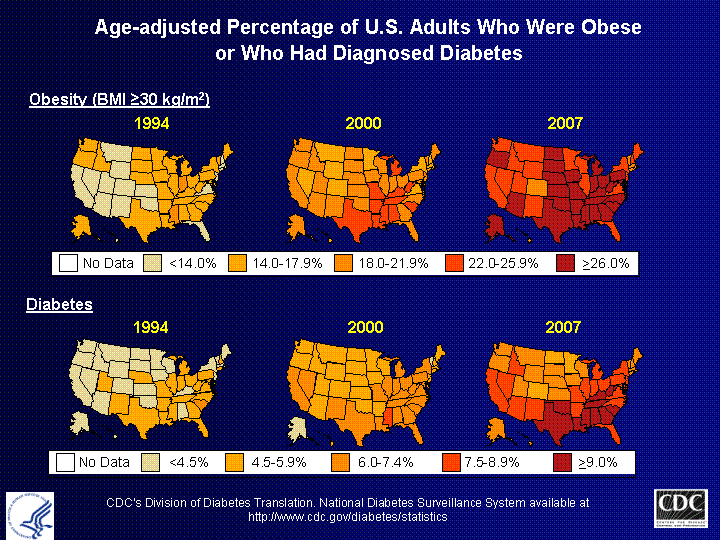


 !!! Misoneism is the "hatred or dislike of what is new or represents change." (http://dictionary.reference.com/browse/misoneistic)
 Heys, Kids - Break a Sweat!!


 For some unfathomable reason, all the page counters got disabled. After days and hours of checking every page, I can finally say that all the counters should be working. If you are really interested in this sort of stuff, more accurate page counts are reported on the
 ... I went online for help with setting up a computer network to take advantage of the supersonic speed of a cable modem.


